Hummingbird Embroidery: Light, Lively, and Ready for Real Projects
First Impressions: A Breath of Air, Not Just Another Bird Design
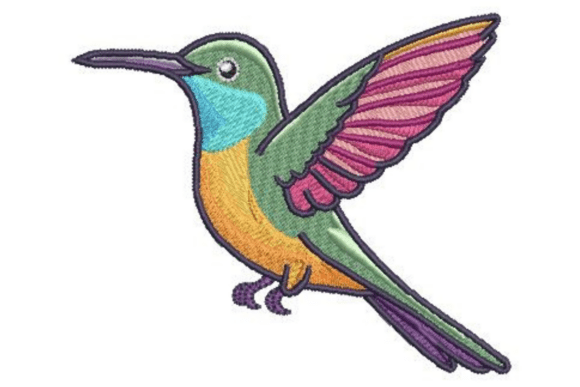
When Hummingbird Embroidery landed in my inbox, I paused mid-scroll—not because it screamed “look at me,” but because it *breathed*. This isn’t a stiff, symmetrical heraldic bird or an over-saturated cartoon. It’s a hummingbird *in flight*: wings blurred with motion, body tilted forward, tail fanned just enough to suggest lift. The shape is lean and directional, which immediately tells me it’ll read well on apparel and accessories—not just as decoration, but as intentional design language. It feels light enough for baby embroidery, detailed enough for boutique sweatshirt embroidery, and elegant enough to hold its own on linen tea towels or nursery decor.
Real-World Test: That Tote Bag You’re About to List on Etsy
Last week, I prepped a batch of organic cotton tote bags for a small shop launch—minimal branding, natural fibers, quiet luxury. I opened Hummingbird Embroidery, sized it to 3.2" wide (a sweet spot for the front panel), and stitched it onto a test bag using medium-weight cutaway stabilizer. The result? Crisp wing edges, no puckering, and that subtle shimmer you get only when satin stitch flows cleanly over fill. Customers don’t buy “a bird.” They buy *movement*, *delicacy*, *summer energy*—and Hummingbird Embroidery delivers that without needing extra text or framing. It stood alone, confidently, on the fabric. No apology needed.
Where It Shines—and Where It Asks for Care
Hummingbird Embroidery works beautifully on:
- Custom apparel: Sweatshirts, lightweight knits, and structured cottons—especially on chest or sleeve placements where motion reads clearly.
- Personalized gifts: Baby onesies (use tear-away + soft stabilizer), pillow covers for nurseries, and holiday embroidery like spring-themed kitchen towels.
- Small business merchandise: As a signature motif on aprons, cap visors, or embroidered patch backings—it scales down without losing legibility.
- Digital product previews: Renders cleanly in printable mockups, especially against muted backgrounds. Its clean silhouette means it converts well to black-and-white line art for packaging or social thumbnails.
But here’s where attention matters:
- Stretchy fabric? Stabilize generously—this design relies on precise wing contours; too much give blurs the illusion of flight.
- Dark fabric? Check thread colors early. Some metallic or pastel threads lose definition; stick with high-contrast options like deep emerald or matte charcoal for clarity.
- Curved surfaces (caps, mugs, curved pillow seams)? Test hoop placement first. The tail tip and wingtips are fine details—they’ll distort if stretched across a curve.
- Frequent-wash items (baby clothes, kitchen towels)? Confirm stitch density isn’t overly tight—dense fill can stiffen fabric over time. Hummingbird Embroidery strikes a smart balance, but always run a wash test.
What It Adds to Your Finished Product—Beyond Pretty
This isn’t just about aesthetics. Hummingbird Embroidery quietly lifts perceived value. On a $38 handmade tote, it transforms “nice cotton bag” into “thoughtful, artisan-crafted piece.” For Etsy sellers, that nuance builds trust—customers recognize intentionality. It also supports brand consistency: use it across a seasonal collection (e.g., hummingbird + lavender sprig + sun motif), and buyers start associating that light, agile energy with your craft business. And yes—it boosts giftability. I’ve seen customers add it to wedding guest books (“the hummingbird we saw at the ceremony”) or new-parent bundles (“a little joy, always in motion”). That emotional resonance? That’s the difference between a machine embroidery design and a story-starter.
Practical Designer Notes Before You Stitch
Before adding Hummingbird Embroidery to your next project, do these five things:
- Test on scrap fabric—same type, same stabilizer, same thread. Watch how the wing veins and tail feathers land. Are they crisp? Or do they feather out?
- Review stitch density in your embroidery software. If it’s heavy on fill stitch near the body, consider lightening density by 5–10% for lightweight fabrics.
- Confirm hoop size compatibility. If you’re working with a 4x4 hoop, check whether the full design fits—or if you’ll need to reposition or resize to avoid trimming.
- Inspect small details in zoom view: the beak tip, eye highlight, and wingtip curves. These define character—if they’re lost in stitching, adjust underlay or slow your machine speed.
- Verify licensing. Hummingbird Embroidery is positioned for real-world use—but confirm whether your intended application (e.g., selling 500 embroidered patches wholesale) falls within permitted commercial embroidery terms. When in doubt, contact the designer directly.
Final Thought: Not Just a Bird—A Design Decision
As someone who’s stitched hundreds of birds—from bold roosters to stylized owls—I keep coming back to Hummingbird Embroidery for one reason: it doesn’t ask to be the center of attention. It asks to belong—to a baby’s onesie cuff, a chef’s apron pocket, a linen pillow cover folded neatly on a shelf. It’s a machine embroidery design that understands context. It’s light enough for delicate work, detailed enough for discerning eyes, and timeless enough to stay relevant across seasons and shops. Whether you’re an Etsy seller building a cohesive summer collection or a custom apparel decorator choosing your next best-selling motif, Hummingbird Embroidery isn’t filler. It’s focus—with wings.