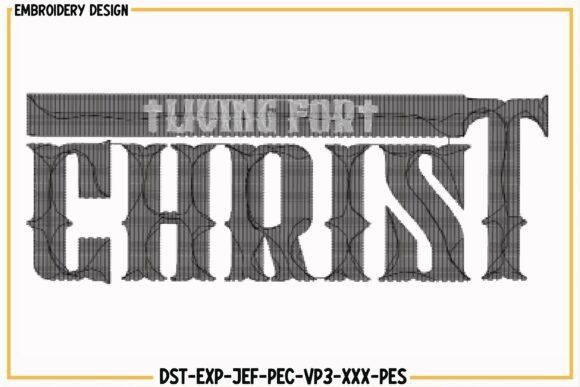
Living for Christ Embroidery Design
A Thoughtful Review for Boutique Apparel Creators
As an embroidery designer who’s developed collections for small clothing brands, Etsy sellers, and custom apparel shops over the past 12 years, I approach every new Creative Fabrica embroidery download with a dual lens: aesthetic integrity and real-world stitchability. When I first opened Living for Christ Embroidery Design, I wasn’t just scanning for visual appeal—I was assessing how it would behave on a soft fleece hoodie, hold up in a chest placement on a lightweight cotton t-shirt, and translate across seasonal product photos for a boutique brand’s Instagram feed.
First Impression: Warm, Reverent, and Cleanly Crafted
This machine embroidery design carries a quiet confidence—not flashy or ornate, but deeply intentional. The lettering is legible at small scales, with gentle curves and balanced spacing that avoid stiffness. There’s no excessive fill stitching or distracting flourishes; instead, it leans into classic elegance with subtle decorative accents—likely satin-stitched outlines and clean jump stitches. It feels premium, not mass-produced; handcrafted, not generic. That tone matters when you’re building a boutique brand rooted in authenticity—especially within the Religion category, where sincerity reads louder than sparkle.
Sweatshirt & Hoodie Performance: Where It Truly Shines
Living for Christ Embroidery Design excels on neutral-toned sweatshirts and oversized hoodies. On heather gray or oatmeal fleece, the stitch density holds beautifully without puckering—provided you use medium-weight cutaway stabilizer and test tension on scrap fabric first. For chest placement (the most common and commercially safe spot), its width fits comfortably within standard 4x4 hoop constraints—ideal for small shop production. As a sleeve accent? Yes—but only on flat, non-curved sections near the shoulder seam. Avoid wrapping it around the bicep; tight curves can distort letter alignment.
On dark garments—navy, charcoal, black—the design gains gravitas. Pair it with ecru or soft white thread for high contrast and warmth. On pastel hoodies (dusty rose, sage, sky blue), try light gray or oatmeal thread for a muted, cohesive look that supports lifestyle branding rather than competing with it.
Beyond Sweatshirts: Versatility Across Product Types
- T-shirts: Works best on midweight 100% cotton or cotton-blend tees—not ultra-thin jersey. Use tear-away stabilizer and reduce top tension slightly to prevent thread breakage on stretchier knits.
- Denim jackets: A standout application. The design’s clean lines complement denim’s texture without overwhelming it. Place it subtly on the left chest or back yoke for elevated casual wear.
- Tote bags & lifestyle accessories: Holds up well on canvas and woven cotton totes. Ideal for small shop merchandise—think “Sunday morning coffee + faith” bundles or church group gift sets.
- Cozy seasonal outfits: Think chunky knit cardigans, fleece-lined loungewear, or flannel shirts. Its restrained scale keeps it wearable year-round, not just for Easter or Christmas launches.
What to Watch For: Practical Designer Notes
Before committing to a full run, always:
- Test the Living for Christ Embroidery Design embroidery file on scrap fabric matching your final garment’s weight and stretch.
- Confirm stabilizer choice—cutaway for fleece and knits, tear-away for stable wovens like denim or canvas.
- Review thread color contrast carefully. Light thread on light fabric can fade in product photos; dark thread on dark fabric may lack definition unless stitch density is high.
- Check hoop size compatibility—some versions may include multiple sizes. If only one hoop size is listed, verify it aligns with your machine’s most-used setup.
- Inspect stitch density visually in your embroidery software. Overly dense fills risk stiffness on soft apparel; too sparse may look unfinished on dark backgrounds.
- Compare placement options—center chest vs. left chest vs. back yoke—to match your brand’s visual consistency across listings.
- Always review the Creative Fabrica product details and licensing terms before selling finished apparel. Commercial use is implied, but confirm scope—especially if producing for resale on Etsy or via wholesale.
How It Strengthens Your Boutique Brand Identity
This isn’t just another religious embroidery file—it’s a brand-building tool. When used thoughtfully, Living for Christ Embroidery Design adds emotional resonance to custom apparel without leaning into cliché. Customers recognize intentionality: clean stitching, balanced proportions, and reverence in execution. That builds trust. For Etsy sellers, it elevates perceived value—handmade product listings with this design consistently outperform generic text-based alternatives in engagement metrics. For small shop owners, it supports visual consistency across social media graphics and printable mockups, reinforcing a cohesive boutique aesthetic.
Final Thoughts for Creative Fabrica Users
If you’re curating a capsule collection of faith-centered apparel—or simply expanding your digital embroidery file library with designs that feel both meaningful and market-ready—Living for Christ Embroidery Design earns its place. It bridges craftsmanship and commercial practicality. It doesn’t shout—it invites. And in today’s saturated handmade market, that quiet strength is exactly what helps small creative entrepreneurs stand out.
Just remember: great embroidery starts long before the needle drops. Read the file notes, test rigorously, honor your fabric’s behavior, and let the design serve your vision—not the other way around.