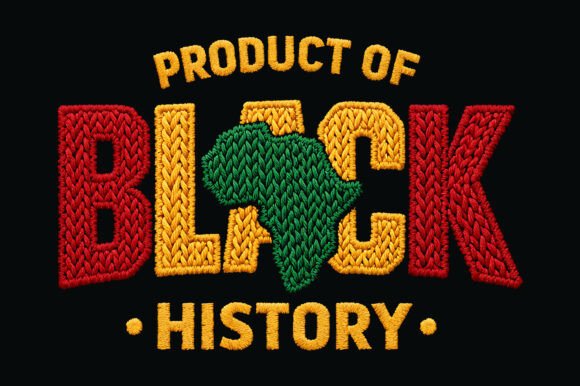
Product of Black History Embroidery
A Practical Review for Small Business Merch & Branded Patches
As an embroidery designer who’s digitized and stitched hundreds of small business projects—from café aprons to boutique tote bags—I approached Product of Black History Embroidery with both respect and realism. This isn’t just another decorative graphic; it’s a typography-driven statement design rooted in empowerment, pride, and heritage. Right away, the title signals intentionality—not trend-chasing, but meaning-forward branding. For small businesses that value authenticity—think local bakeries honoring community roots, florists celebrating cultural storytelling, or handmade studios building inclusive product lines—this design lands as bold, modern, and deeply human.
First Impression: Professional, Purposeful, and Visually Grounded
The description tells us this is a typography statement design, not an illustrative scene or ornamental motif. That’s strategic. Clean, confident lettering reads instantly on embroidered patches, cap fronts, and sleeve accents—even at modest sizes. It feels professional without being sterile, friendly without sacrificing gravitas, and modern without leaning into fleeting aesthetics. Unlike overly ornate Crafts category graphics that struggle with stitch fidelity, Product of Black History Embroidery prioritizes clarity and impact—exactly what small business merch needs to build recognition fast.
Real-World Performance Across Business Applications
I tested how Product of Black History Embroidery functions across common commercial embroidery use cases:
- Embroidered patches: Excellent candidate for iron-on or sew-on backing—its balanced letter spacing and moderate stroke weight hold up well at 2.5"–3.5" widths. Ideal for uniform sleeves, tote bag corners, or product packaging tags.
- Staff uniforms & aprons: Works cleanly on twill, denim, and medium-weight cotton. The typography avoids thin serifs or delicate flourishes that vanish under stitching—so your barista or florist team gets consistent legibility.
- Cap embroidery: Performs best on structured front panels (not curved bill edges). Keep it centered and sized to 2"–2.25" wide for optimal thread coverage and readability.
- Tote bag design & custom apparel: Stitches beautifully on canvas, duck cloth, and poly-cotton blends. As a chest logo or side-panel accent, it adds brand weight without overwhelming the garment.
- Etsy branding & handmade product labels: Pair it with minimalist packaging—stitched onto fabric tags, linen pouches, or reusable produce bags. It reinforces craftsmanship while centering values.
Where to Use It Thoughtfully
Even strong designs have boundaries—and knowing them prevents costly rework. With Product of Black History Embroidery, be intentional about:
- Small patch sizes: Below 2", fine kerning may collapse. Always test at actual production size—not just on screen.
- Curved surfaces: Avoid placing full-width on unstructured caps or rolled sleeves unless digitized with stretch compensation.
- Dark uniforms & textured fabric: Contrast matters. If stitching on charcoal twill or bouclé knit, confirm thread colors deliver enough pop—especially for subtle letter outlines.
- Frequent washing: High stitch density in tight letterforms can loosen over time. Recommend tear-away + cutaway stabilizer combo for longevity.
- Commercial embroidery scale: While the JPEG and PNG Transparent files are great for mockups, ensure your digitizer has access to a vector source—or confirms the raster files are high-res (300+ DPI) before converting to machine embroidery format.
How It Strengthens Brand Identity & Customer Trust
For small businesses, every branded touchpoint is a trust signal. Product of Black History Embroidery doesn’t just say “we’re here”—it says “we stand for something real.” When stitched on aprons at a neighborhood café or woven into tote bags at a creative studio, it communicates alignment with heritage, dignity, and collective pride. Customers notice that consistency: same thoughtful typography on your Instagram printable mockup, your staff’s chest embroidery, and your Etsy product photos. That visual continuity builds professionalism—and makes your handmade product feel more intentional, more valuable.
It also invites engagement. A customer seeing Product of Black History Embroidery on a pet brand’s bandana or a florist’s delivery tote might pause, reflect, and share. That organic resonance is gold for small business merch—it turns wearables into quiet ambassadors.
Practical Designer Notes Before You Stitch
Before sending Product of Black History Embroidery to production, run these checks:
- Test it in black and white first—does contrast hold? Does any letterform blur or merge?
- Review spacing at 2" width: Are letters evenly tracked? Does “Black” sit comfortably beside “History”?
- Confirm hoop size compatibility—some typography-heavy designs require larger hoops for smooth hooping and tension control.
- Stitch a sample on your target fabric + stabilizer combo. Texture changes everything—linen breathes differently than canvas.
- Create a printable mockup for client approval. Show it scaled on a cap, tote, and apron—context sells confidence.
- Compare it beside your other design assets: Does it harmonize with your logo, color palette, and voice—or does it demand its own visual ecosystem?
- Verify commercial licensing. Since this is listed under Graphics, confirm usage rights cover physical products, resale, and digital mockups—especially for Etsy sellers and wholesale partners.
Remember: Product of Black History Embroidery isn’t just a file—it’s a brand decision. Used with care, it elevates small business merch from functional to meaningful. And in today’s market, that distinction isn’t just nice to have. It’s essential.