Autumn Floral Jellyfish Embroidery
A Designer’s First Impression: Graceful, Warm, and Unexpected
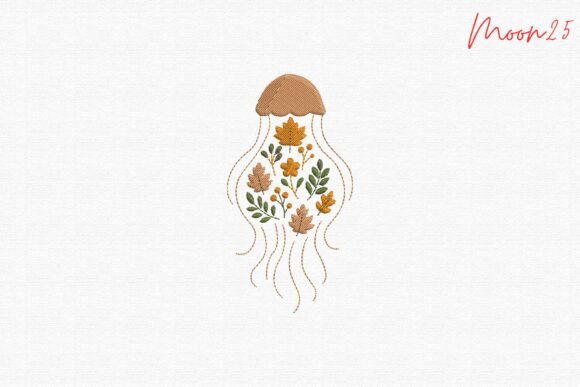
When I opened the Autumn Floral Jellyfish Embroidery file, I paused—not because it was technically complex, but because it *felt* like a quiet conversation between seasons. A jellyfish shape—fluid, organic, slightly whimsical—filled not with oceanic translucence, but with layered autumn botanicals: curled maple leaves, slender stems, tiny aster-like blooms, and soft vine tendrils. The layout breathes; there’s no visual crowding, even though detail is abundant. It doesn’t shout “fall”—it murmurs it, in rust, ochre, sage, and dusty rose tones implied by the design’s structure. This isn’t a literal seasonal cliché. It’s a refined motif that works equally well on a modern baby onesie or a boutique apron for a seasonal café.
Real Project Test: Stitching It Onto a Linen-Cotton Tote Bag
Last week, I used the Autumn Floral Jellyfish Embroidery to finish a limited-run tote for a local herbalist’s holiday pop-up. Medium-weight linen-cotton blend, 5-inch hoop, medium tear-away stabilizer. The result? Crisp satin-stitched outlines held beautifully around the jellyfish’s bell, while the fill stitches in the floral elements stayed airy—not dense or muddy. Customers kept picking up the bag just to trace the shape with their fingers. That tells me something important: this design has tactile appeal *before* it’s even read as “jellyfish” or “autumn.” It invites touch, slows down the eye, and feels intentional—not decorative filler.
Where It Shines (and Why Your Customers Will Notice)
- Custom apparel: On a heavyweight sweatshirt, the flowing lines soften the garment’s structure without looking fragile. Perfect for small-batch branding—think “Harvest Apothecary” or “Maple & Moss Co.”
- Personalized gifts: As a monogrammed pillow cover for a new parent, the gentle asymmetry makes it feel handmade, not mass-produced—even when stitched consistently.
- Etsy listings & craft fair products: Paired with a simple “hand-embroidered” tag and natural fiber packaging, the Autumn Floral Jellyfish Embroidery elevates perceived value instantly. Buyers associate its cohesion and mood with care, not speed.
- Digital product previews: In printable mockups, it renders cleanly at 3x and 5x scale—no pixelation in the leaf veins or petal edges. That means your Etsy thumbnail and lifestyle photo will communicate quality before a single word is read.
Use With Care: Practical Limits You’ll Want to Know
This isn’t a one-size-fits-all embroidery file—and that’s a strength, not a flaw. Its elegance depends on thoughtful execution.
- Avoid tight hoop sizes under 4 inches. The outer curves of the jellyfish bell need breathing room. Crowding them compresses the flow and blurs delicate stem details.
- Think twice before using it on highly textured fabrics like bouclé or thick terry cloth—the fine floral fill stitches can disappear into the nap.
- Stretchy fabric demands caution. While the overall shape is forgiving, the slender stems and thin connecting vines rely on stable tension. Use cut-away stabilizer and test stitch density first.
- Dark fabric? Yes—but check thread contrast. A deep charcoal background makes the warm tones sing, but low-contrast thread (e.g., light tan on navy) loses definition. Run a black-and-white mockup to verify silhouette clarity.
- Curved surfaces (like caps) require repositioning. The jellyfish’s vertical orientation doesn’t wrap naturally. Rotate it 15–20° or use it on the side panel instead of center crown.
What This Design Says About Your Brand—Before You Say a Word
When customers see the Autumn Floral Jellyfish Embroidery on your finished product, they’re subconsciously reading your standards. The balanced negative space signals confidence—not over-designing. The botanical integration suggests thoughtfulness about theme and texture. And the absence of cartoonish exaggeration builds trust: this isn’t novelty embroidery; it’s considered design.
I’ve watched buyers linger longer on items featuring this motif—not because it’s loud, but because it feels *resolved*. That pause translates directly to higher perceived value, better giftability (especially for weddings, baby showers, or teacher appreciation), and stronger brand consistency across apparel, home goods, and digital assets.
Designer Notes You Can’t Skip
- Always test on scrap fabric first—especially if pairing with a new stabilizer or thread brand. Satin-stitched edges behave differently on cotton duck vs. brushed poly.
- Review stitch density in your editing software. If the floral fills feel too heavy for lightweight tea towels, reduce density by 8–12% before stitching.
- Confirm licensing terms before selling finished items. As an embroidery file, its commercial use rights affect your ability to list on Etsy, wholesale to boutiques, or include in subscription boxes.
- Check small details at actual stitch size. Zoom in on the tip of the smallest leaf—it should be clean, not frayed or overly tapered. If it looks weak, add a single running stitch reinforcement manually.
- Compare light/dark backgrounds in mockups. A design that sings on cream may vanish on oatmeal. Don’t assume contrast—verify.
- Ask: Does this support both personal and commercial goals? For crafters, it’s a standout handmade product. For sellers, it’s a scalable design asset—provided your file includes clean color-separation guidance.
Final Thought: Not Just an Embroidery File—A Quiet Signature
The Autumn Floral Jellyfish Embroidery won’t dominate a shelf. It won’t go viral for shock value. But it *will* make someone stop, tilt their head, and smile—then reach for their wallet. That’s the mark of a design that understands people, not just pixels. Whether you’re stitching a one-of-a-kind baby blanket or building a cohesive line of holiday merchandise, this motif carries warmth without sentimentality, detail without clutter, and seasonality without expiration. Use it like a signature—not a stamp.